
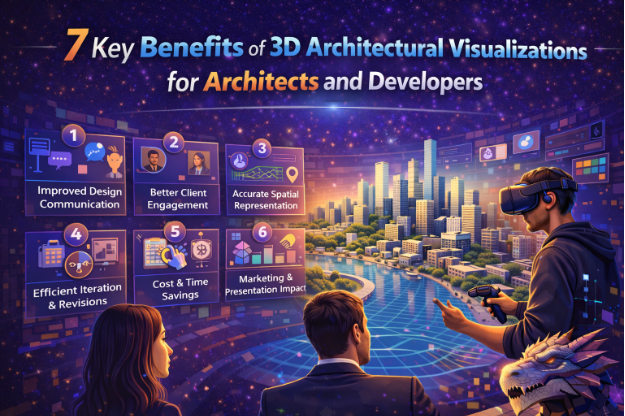

The field of architecture and real estate development has become more complex and competitive in its nature. The present scenario has made success not only dependent upon creativity and effective design concepts but also upon the clarity of these concepts as well. This has resulted in the increased application of 3D architectural visualization.
This technology has been able to fill this gap between planning and the implementation of projects by enabling the visualization of plans in order to easily understand what has been planned. Below are seven points showing the importance of this technology in the architectural field today.
1. Effective Communication of Design Intent
One of the biggest problems in the field of architecture has to do with the communication of design intent from the architect to the client or interested party who does not necessarily possess any architectural training. This becomes particularly true with floor plans and elevations, which are frequently ambiguous.
3D Visualization company provides complete clarity as it projects designs as they are supposed to appear in a three-dimensional format. Size and proportions are clearly visible in three-dimensional format, and even the lights and materials are visible.
2. Fast Approvals and Decision-Making by the Client
Ambiguous communications can cause delays, meetings, and hesitations. Graphic communications help the client immediately comprehend every detail related to a particular project in order for them to fast-track approvals.
When a realistic view of the result is provided to the stakeholders, they can make decisions with more confidence. Comparison between designs, whether material, layout, or finish, becomes easier, and this reduces punctuations in the approval process.
This will result in easier passage of projects and fewer roadblocks for architects and developers.
3. Early Identification of Design Issues
One of the greatest advantages of architectural visualization is the fact that possible errors in the architectural design might be picked up at an early stage of the process.
It is quite hard or impossible for the human brain to recognize errors while viewing architectural designs in two-dimensional form. It becomes possible for the human brain to recognize errors that could not be recognized at an earlier stage when architectural designs and models are viewed in three dimensions.
These may include:
- Poor spatial flow
- Unkempt proportions
- Lighting challenges
- Conflictual texts or components
All these aspects will be taken care of during the design phase, thus eliminating unnecessary expenses that are incurred during the construction phase.
4. Greater Emotional Belonging among Stakeholders
Architecture is not just structure; it is experience, and visualization communicates that experience that an architecture creates.
Authentic effects, textures, and settings all serve to offer the audience a place for the projection of oneself within that setting. The emotional response linkage serves a critical purpose in areas such as residential buildings and hotels, as well as mixed-use developments.
When individuals are in love with the design, approvals and commitments are much easier.
5. Better Marketing and Pre-Sales Services
For the developer, visualization can be an important marketing tool. Projects can be marketed even before completion. This helps the marketing process as well as the sales process to begin at an earlier date.
Excellent visuals accompany:
- Pre-Sales Campaign
- Investor Presentations
- Marketing flyers and websites
- Social media advertisement and online listing
These resources can only be provided through the collaboration and involvement of a professional 3D visualization firm to create this consistent standard and competitive leading edge in existing markets.
6. Enhancing Coordination Among Project Teams
Architectural projects involve the involvement of various professionals, such as architects, interior designers, engineers, developers, and contractors. This is where visualization plays its role, as it ensures that all individuals are on the same page.
7. Reduced Risk and Cost Efficiency
It is expensive and painstaking if modifications are done during construction. Visualization helps reduce risks because engineers can try out their designs until they are satisfied with them without building anything physically first.
Including IP lawyers in design decisions can offer the following benefits to projects:
- Fewer revisions
- Less waste material
- Better cost management
- Enhanced project timelines
Why Visualization is an Advantage Strategically
Excluding the potential short-term positives that the technique may bring concerning a project, the use of visualization is critical to the success that architects and developers must achieve. In other words, the image that professional, innovative, and customer-driven companies want to project to the world is achieved through the use of superior visualization.
With an expert 3D visualization partner, expect to have leading tools, talented artists, and best practices in place, meaning your attention can be focused purely on strategy and creativity, and yet still have top-notch presentation work done.
Conclusion
With a busy and complex modern environment, there is a need for greater understanding and confidence. 3D architectural visualizations can help architects and developers communicate their vision effectively and make well-informed decisions despite risks during the development process.
Beginning from design verification to marketing and even before sales performances, visualization holds the capability to affect project conceptualizing, communication, and eventually implementation. With proper usage of visualization tools, they not only assist in designs but serve as huge benefit tools for businesses in terms of efficiency, confidence, and success.